
Apostolic inheritance and metropolitan custody
The Metropolitan and Apostolic See of Aquileia
The historic Apostolic See of St. Mark at Aquileia forms part of the inherited ecclesiastical patrimony of the United Roman-Ruthenian Church.
The Roman-Ruthenian Pope accordingly bears within the Church the dignity of Metropolitan Archbishop of Aquileia and serves as custodian of this ancient See. Aquileia is preserved not as an isolated honorific, but as a living element of a Roman-Ruthenian inheritance that brings together Apostolic succession, metropolitan responsibility, and the temporal and imperial patrimony of Italy.
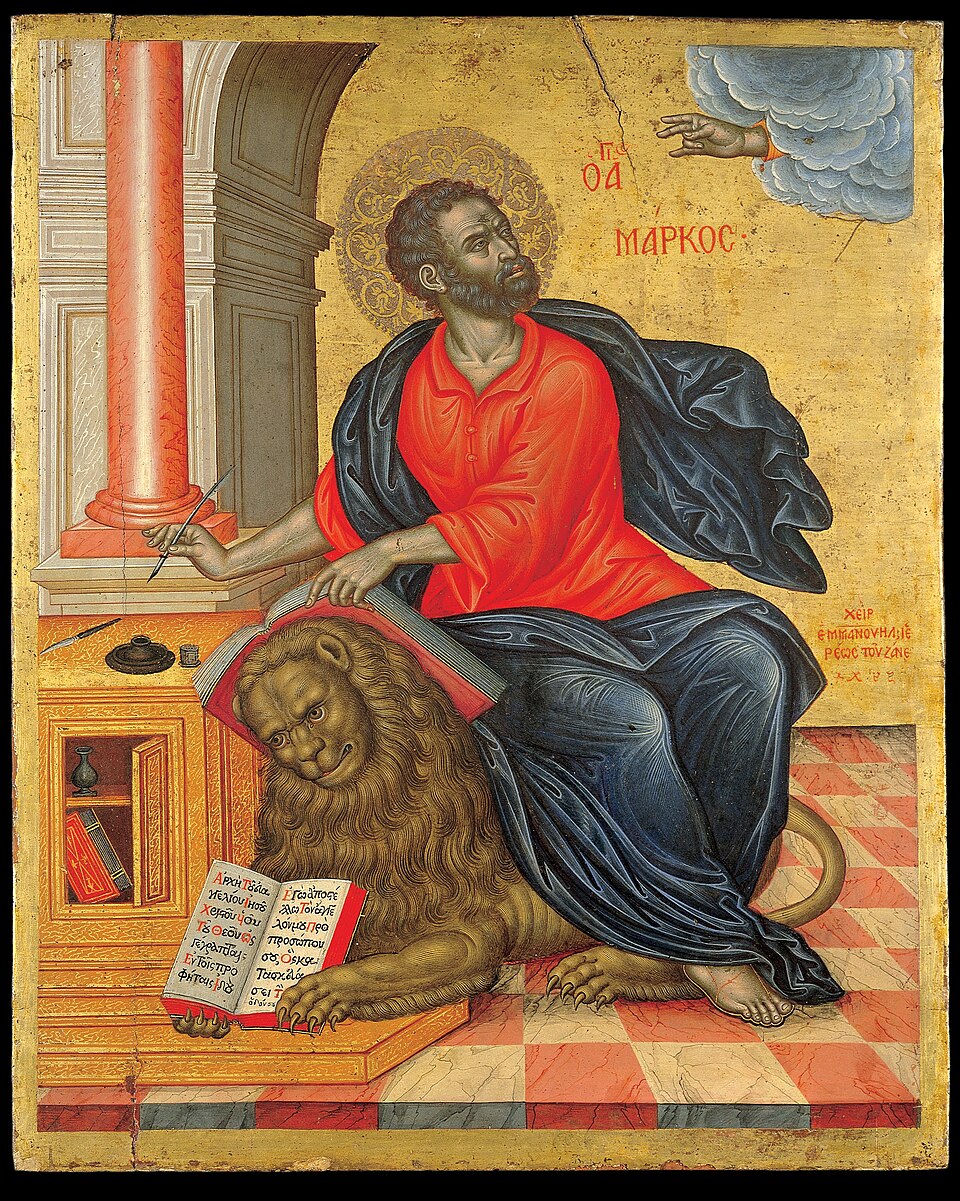
The Aquileian apostolic tradition
The See of St. Mark
The ancient tradition of the Church of Aquileia associates its Apostolic foundation with St. Mark the Evangelist, who is held to have preached there and established its first episcopal succession through St. Hermagoras.
By the late Roman period, Aquileia had become one of the foremost Christian centers of northern Italy. Its metropolitan influence reached beyond the peninsula, carrying the faith along the Adriatic and across the eastern Alps into Central and southeastern Europe.
A meeting place of Christian civilizations
A crossroads of Christian traditions
Founded as a Roman colony and developed into a great ecclesiastical center, Aquileia stood where the Italian peninsula opened toward the Adriatic, the eastern Alps, and the Slavic lands. Its identity was formed at a frontier that was also a bridge.
A Western metropolitan center
Aquileia grew within Roman civic life and Latin Christianity, becoming one of the principal sees of northern Italy.
An Eastern horizon
Adriatic and imperial connections joined Aquileia to the Greek-speaking East and to the ecclesiastical world of Byzantium.
A gateway beyond Italy
Its province and missionary influence extended through the eastern Alps and toward the Slavic Christian world.
A Church with temporal form
The Patriarchate later exercised territorial rule within the Holy Roman imperial order as a sovereign ecclesiastical principality.
This convergence gives Aquileia particular significance within Rome-Ruthenia, itself an Eastern Roman Church with Latin heritage that unites Roman and Slavic inheritance within one Orthodox and Catholic Apostolic life.
From Roman colony to patriarchal state
The long life of the Aquileian See
Aquileia's ecclesiastical importance developed across many political worlds without losing the memory of its Apostolic origin.
Foundation of Roman Aquileia
Aquileia was founded as a Roman colony and became a major commercial and strategic center between the Mediterranean and Central Europe.
An ancient Christian community
The Aquileian Church emerged in the first Christian centuries and, according to its ancient tradition, traces its foundation to St. Mark and its first episcopal succession to St. Hermagoras.
A great metropolitan Church
The episcopal complex and its celebrated mosaics testify to an established Christian center whose influence spread across a wide transalpine and Adriatic region.
The patriarchal dignity
The Archbishop of Aquileia assumed the title of Patriarch amid the ecclesiastical controversies and changing imperial order of late antiquity.
The Patriarchal State
An imperial grant established the temporal principality of Aquileia in Friuli, joining metropolitan and patriarchal office to sovereign rule within the Holy Roman Empire.
Suppression of the historic Patriarchate
The former Patriarchate was canonically suppressed and its conventional jurisdictions divided, while the Aquileian Apostolic, metropolitan, and historical inheritance endured.
Custody within Rome-Ruthenia
The United Roman-Ruthenian Church preserves the See within its received ecclesiastical, temporal, imperial, and dynastic patrimony.
Ecclesiastical, temporal, and dynastic lines
The Aquileian inheritance in Rome-Ruthenia
Within the patrimony of the United Roman-Ruthenian Church, Aquileia is held through converging ecclesiastical, temporal, imperial, and dynastic lines. The Italian inheritance transmitted through St. Leo X, Matilda of Tuscany, Florence, and the Etrurian dynastic gifts preserves the temporal and imperial dimension once associated with the sovereign Patriarchal State.
The Aquileian inheritance therefore represents more than an ancient title. It remains an Apostolic and metropolitan See situated for centuries at one of the principal meeting places between the Latin West, the Byzantine East, and the Slavic Christian world.

Distinct offices within one Apostolic structure
Aquileia within the Holy Apostolic See
Diocese of Rome-Ruthenia
The particular Church in which the Roman-Ruthenian Pope serves directly as diocesan bishop.
Metropolitan See of Aquileia
The historic Apostolic See entrusted to his custody in the dignity of Metropolitan Archbishop of Aquileia.
Holy Apostolic See
The wider ecclesial body in which diocesan, metropolitan, patriarchal, and pontifical responsibilities are united.
Continue exploring the Roman-Ruthenian inheritance
Related sees and patrimonies
Aquileia's place is best understood alongside the direct diocesan office of the Roman-Ruthenian Pope, the history of the Holy Apostolic See, and the Italian patrimony from which its temporal and imperial inheritance is preserved.