

A particular Church within the Apostolic See
The diocesan home of the Roman-Ruthenian Pope
The United Roman-Ruthenian Church is an autocephalous Apostolic Church—the Eastern Roman Church with Latin heritage. Its present united institutional form was established in 2023 through the union of the former Anglican Patriarchate of Rome and the Gallo-Russo-Byzantine Catholicate.
Within that Church, the Diocese of Rome-Ruthenia is the proper diocesan jurisdiction of the Roman-Ruthenian Pope. It gathers the faithful and clergy placed directly under his episcopal care and preserves the diocesan continuity from which the wider institutions of the modern Holy Apostolic See developed.
The Pope as bishop
Here the Roman-Ruthenian Pope serves in the immediate and pastoral office of diocesan bishop: teaching, sanctifying, governing, and caring directly for the portion of the Church entrusted to him.
The parent diocese
The Diocese preserves the living continuity of the former Diocese and Metropolitan Archdiocese of the Southwest, the See of St. Stephen, and the Coadjutorship of Rome within the United Roman-Ruthenian Church.
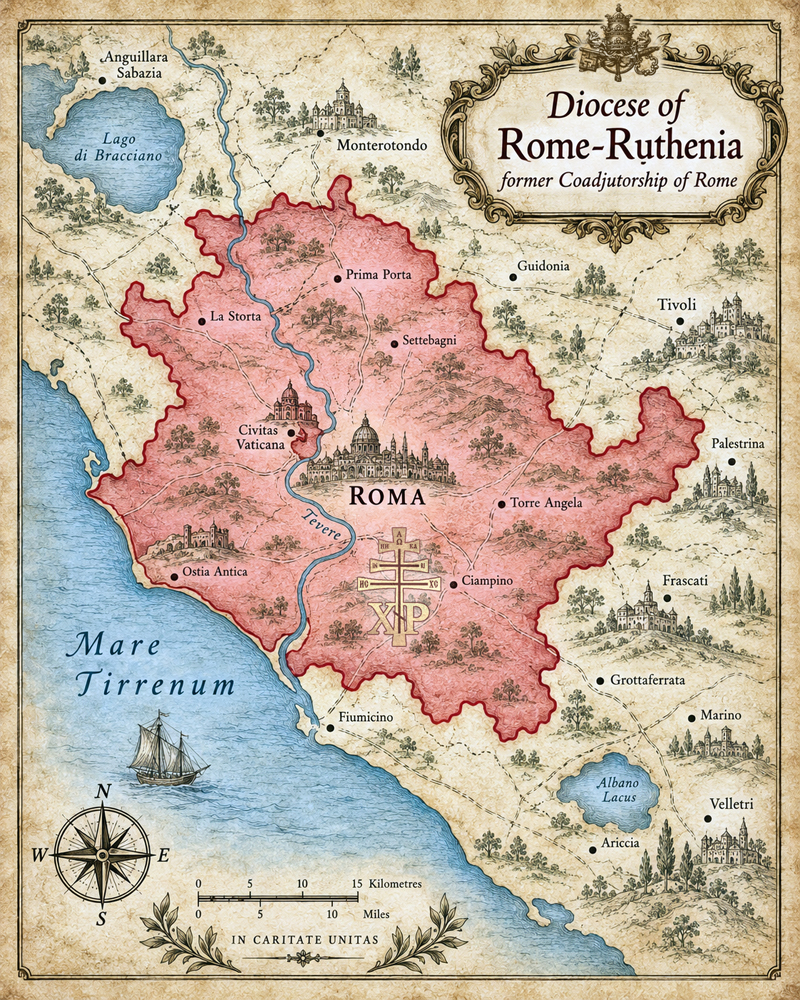
Territorial inheritance and worldwide pastoral care
One diocese, two complementary dimensions
For purposes of its received Orthodox jurisdiction and the historical grants underlying it, the Diocese is geographically coterminous with the Diocese of Rome. Its pastoral jurisdiction is also personal and not exclusively territorial.
The Diocese therefore encompasses the faithful and clergy, wherever they may live, for whom the Roman-Ruthenian Pope is the direct diocesan bishop. Its historic Roman scope and its worldwide pastoral operation are complementary expressions of the same particular Church.
Roots, first chair, and Petrine service
A diocesan inheritance carried forward
The Diocese's present Roman-Ruthenian identity developed from a documented episcopal, institutional, and pastoral inheritance. These three points of continuity explain the path without repeating the Church's complete historical record.
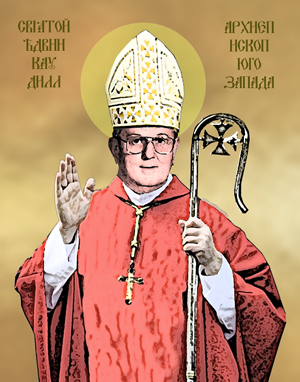
St. Edwin Caudill
St. Edwin brought the Diocese of the Southwest into Orthodox and Catholic Apostolic succession. His episcopal see is the immediate diocesan root of the Diocese of Rome-Ruthenia.
Life and legacy of St. Edwin
Historic Diocese of the Southwest
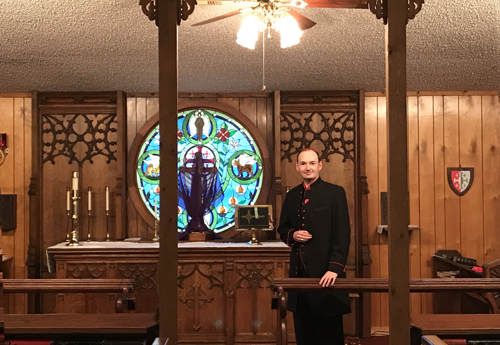
St. Chad's: the historic first chair
St. Chad's served as the cathedral of St. Edwin's ministry and stands in the history of the Church as the first chair of the present Holy Apostolic See.
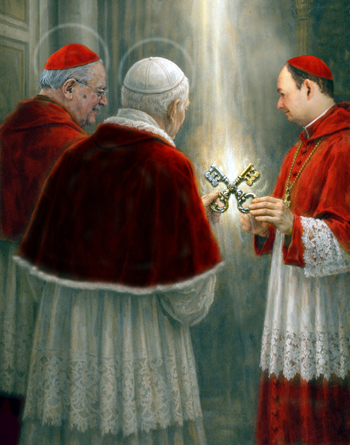
Custodia Petri
The Coadjutorship of Rome and the papal grant placed the Diocese's earlier succession within its fuller Petrine vocation: the guardianship and service of the Latin Orthodox inheritance of St. Peter.
Development of the modern diocese
From the Southwest to Rome-Ruthenia
The Diocese of Rome-Ruthenia grew from the episcopal inheritance of the Diocese of the Southwest under St. Edwin Caudill, who brought that see into the fullness of Orthodox and Catholic Apostolic succession.
Orthodox and Catholic Apostolic succession
St. Edwin Caudill brought the Diocese of the Southwest into Orthodox and Catholic Apostolic succession, establishing the sacramental inheritance continued by the present Diocese.
Reactivation of the Diocese
The Diocese of the Southwest was reactivated by apostolic mandate, renewing the institutional line that would develop into the present See.
Metropolitan Archdiocese
The Diocese became the Metropolitan Archdiocese of the Southwest as its ecclesiastical responsibility and structure expanded.
The See of St. Stephen
It became a non-territorial diocese and was renamed the See of St. Stephen after its patron. It served as the primary diocese of the Anglican Patriarchate of Rome, also known as the Patriarchate of St. Stephen.
Papal status and the Coadjutorship of Rome
With the formal grant of papal status within its own Church and the reception of the Coadjutorship of the Roman diocese, the See became coterminous with the Diocese of Rome for purposes of its Latin Orthodox jurisdiction.
Public disclosure begins
The papal status and its related jurisdictional history began to be formally presented in public, clarifying the acts and institutional development already grounded in the life of the Patriarchate.
The Diocese of Rome-Ruthenia
With the act of union that established the modern United Roman-Ruthenian Church, the See assumed its present name as the Diocese of Rome-Ruthenia.
Full public manifestation
The Coadjutorship reached its intended completion with the full public manifestation of the Roman-Ruthenian papal title for Latin Orthodoxy and the Diocese's present identity.
Continue exploring the Holy Apostolic See
The Diocese within the wider Church
The diocesan, metropolitan, patriarchal, and pontifical dimensions of the Roman-Ruthenian Church are distinct responsibilities within one coherent Apostolic structure.