Supreme Office
The Holy Father
The Roman-Ruthenian Pope and head of the United Roman-Ruthenian Church and Pontifical Imperial State.
Enter
Ecclesia Patria Nostra
Government of the Roman-Ruthenian Church and State
The institutions through which the United Roman-Ruthenian Church and Pontifical Imperial State exercise apostolic governance, preserve their sacred patrimony, and coordinate service throughout the Church.
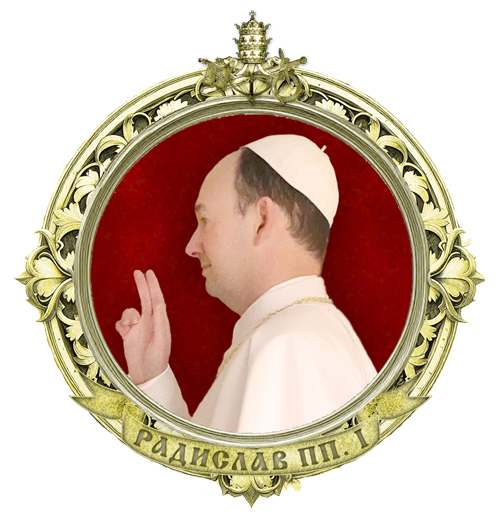
Apostolic governance
The government of Rome-Ruthenia joins the ecclesiastical life of an autocephalous Apostolic Church with the historic temporal patrimony of the Pontifical Imperial State.
Its offices sustain worship, doctrine, law, diplomacy, education, administration, charitable work, and the ceremonial life of the Apostolic See. Their purpose is not bureaucracy for its own sake, but the orderly service of the Church and those entrusted to its care.
The work of the Curia
Direct access to the offices, norms, and records most often needed by clergy, officials, students, and the public.
Clergy and curial personnel, appointments, expectations, and applications for service.
Open OfficeThe sections coordinating general affairs, state affairs, diplomacy, and central correspondence.
Open SecretariatCurial coordination, institutional development, and the programme for building sustainable ministry.
Open OfficeThe treasury and financial administration of the Holy Apostolic See.
Open AerariumThe governing canons, juridical order, offices, responsibilities, and discipline of the Church.
Read the CodeLong-standing rules, principles, precedence, conduct, and expectations gathered for practical use.
Read the ManualDiplomatic representation, procedures, credentials, and relations of the Apostolic See.
Diplomatic OfficeOfficial protocol, forms of address, precedence, and the honours conferred by the Church and State.
The current leadership and personnel serving within the institutions of government.
View the RollInstitutional structure
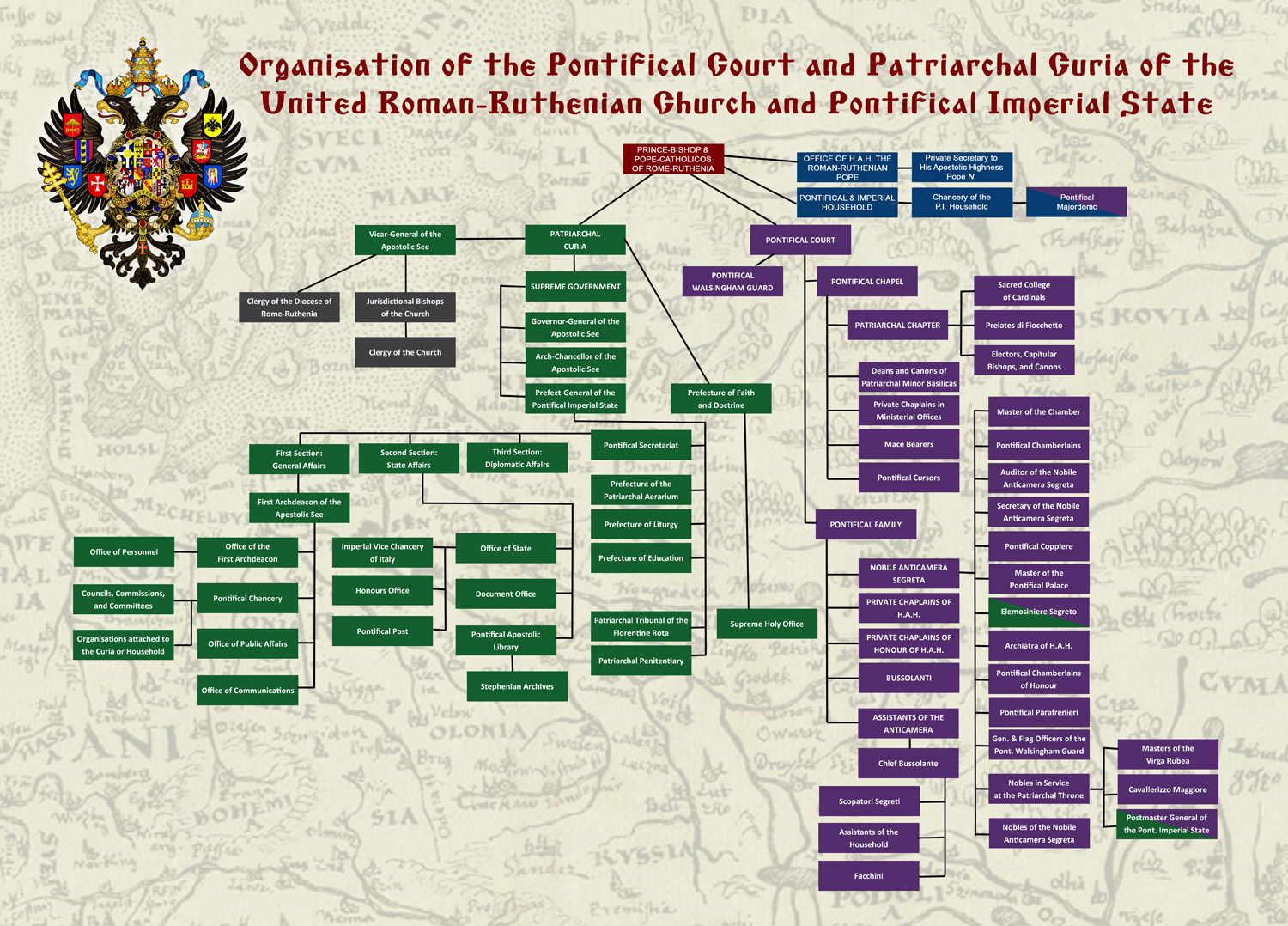
The organization chart shows the relationship between the Pope, central government, Pontifical Court, and their principal offices.
Institutions and patrimony
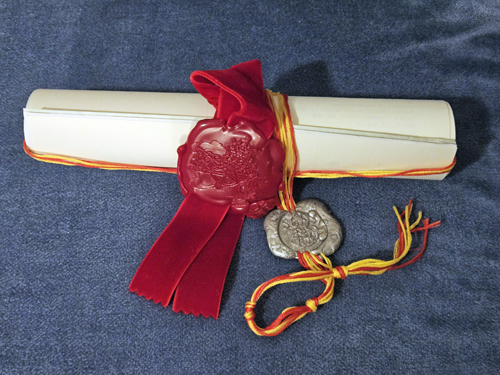
Continuity in the documentary record
Among the preserved archival holdings of the Pontifical Chancery are ecclesiastical instruments connected to the early juridical and patriarchal development of the United Roman-Ruthenian Church and issued by authorities of the Holy See of Rome.
They concern the reception of apostolic jurisdiction, patriarchal autocephaly, and papal dignity within the continuing Orthodox and Catholic tradition now embodied in the Roman-Ruthenian Church and State. These documents form part of the sacred patrimony of the Church and are preserved with care and continuity.
Purpose and public understanding
The institutions of government are best understood in relation to the vision, mission, history, and spiritual life of the Church they serve.
Support the Apostolic mission
The central institutions of the Church support worship, education, communications, charitable ministry, and worldwide service.
